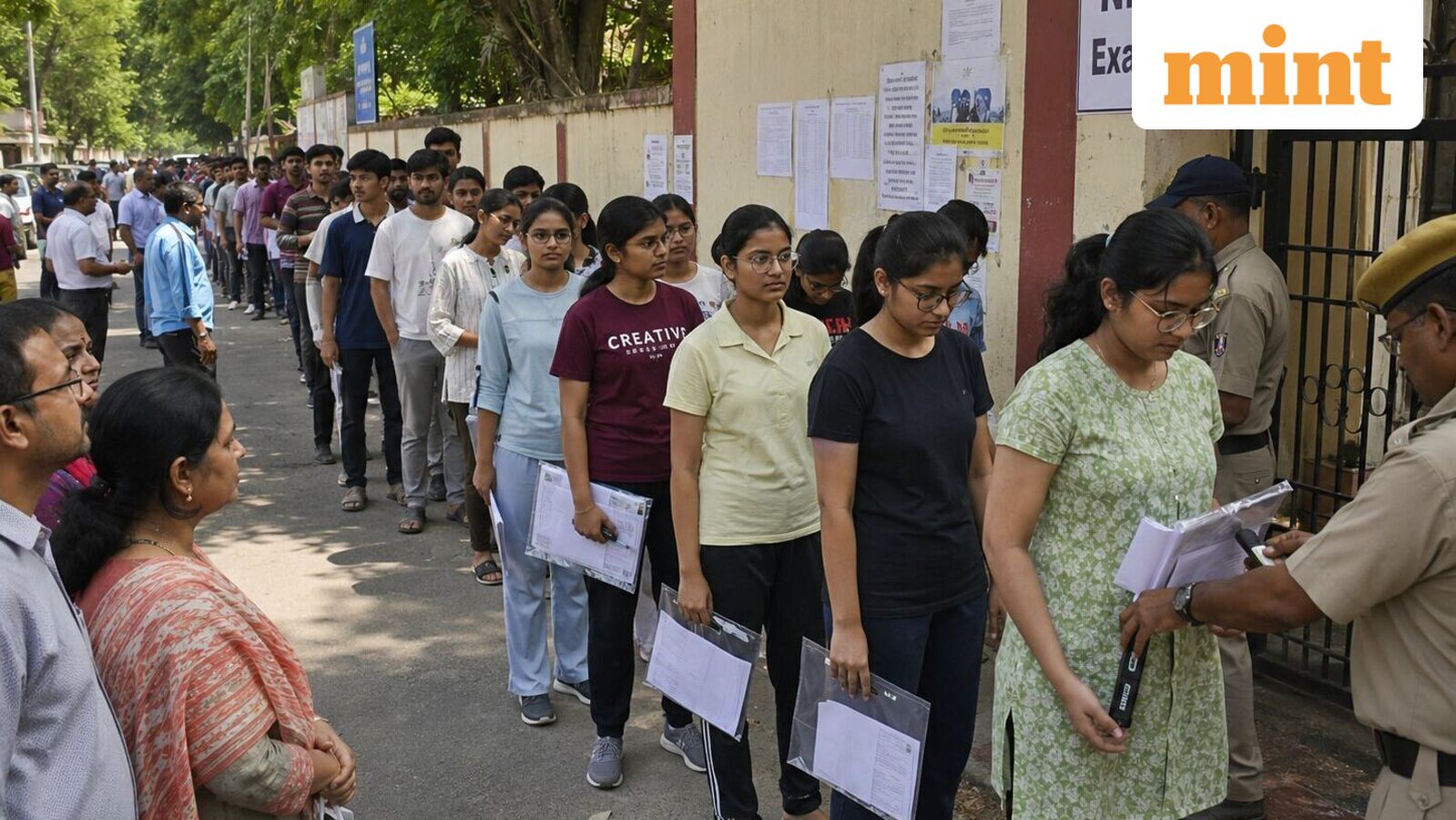
Despite lowering the percentile bar to zero, src,src40 postgraduate seats remained unfilled in the 2025-26 academic year. (HT) Summary
The Union health ministry is now considering a more merit-based approach, including a 40th percentile cutoff instead of zero, along with multi-tiered counselling rounds based on remaining vacancies, according to two officials.
New Delhi: Professional competence may soon take precedence over merely filling seats, as the Centre is reviewing the zero-percentile eligibility criterion for NEET-PG admissions to 85,839 medical postgraduate seats—a rule introduced in 2024 to prevent vacancies, according to two government officials aware of the matter.
Despite lowering the percentile bar to zero, src,src40 postgraduate seats remained unfilled in the 2025-26 academic year, raising concerns over the dilution of medical education standards and the waste of taxpayers’ money. The government spends about ₹src.25 crore per postgraduate seat, with the course spanning three years.
The Union health ministry is now considering a more merit-based approach, including a 40th percentile cutoff instead of zero, along with multi-tiered counselling rounds based on remaining vacancies, according to the first of the two officials cited earlier, both speaking on condition of anonymity.
“Every year after the second round of counselling, the ministry reviews vacant postgraduate seats to determine percentile reductions. However, dropping eligibility to a zero percentile compromises medical quality, and strips away the competitive spirit. While we must ensure seats don’t go to waste, we cannot compromise on healthcare quality,” this official said.
The proposal comes amid criticism over allowing poorly qualified candidates to secure specialised postgraduate seats. The eligibility threshold for reserved category candidates (Scheduled Castes, Scheduled Tribes and Other Backward Classes) was reduced to zero percentile, making even those scoring as low as minus 40 out of 800 eligible for counselling. The cutoff for general category candidates was also lowered sharply, from the 50th to the 7th percentile.
To be sure, marks and percentiles are different metrics, with the latter reflecting a candidate’s performance relative to others. For instance, a candidate in the 50th percentile has performed better than 50% of those who took the test.
The policy was introduced to prevent postgraduate seats from going vacant in courses such as anatomy, physiology, biochemistry, pharmacology, forensics, microbiology and pathology.
The policy review follows a directive from the Supreme Court on srcsrc March asking the health ministry to justify that sharply lowered eligibility thresholds do not compromise the quality of medical education in the country.
Queries emailed to the spokespersons of the health and family welfare ministry, and the National Medical Commission (NMC), regulatory body for medical education and professional practice, remained unanswered till press time.
“The zero percentile criteria is currently being reviewed due to ongoing legal challenges and observations that the government cannot lower the bar to absolute zero just because seats are vacant, as it allows a candidate to sit for the exam, score nothing, and still walk away with a specialized postgraduate seat,” said the second official.
“While the policy was initially supported to maximize seat utilization, its real-world impact has been counterproductive. Despite lowered thresholds, a total of src,src40 seats remained vacant after final counselling rounds in 2025,” the official added.
“The issue is being examined because we have to get a consensus of all the stakeholders. There are two schools of thought, a simple principle is based on that you have given degrees to the MBBS students on convocation and they are registered with the NMC with a licence to practice. After that, assessing them again for a quality component does not make sense. The only reason why percentile was brought in was simple, that we have fewer PG seats and the exam is mainly for merit,” said the second official.
Dr Dilip Bhanushali, former president of the Indian Medical Association (IMA) representing 400,000 doctors, said, “The NEET-PG zero percentile criteria does not equate to a drop in medical education standards. Zero percentile doesn’t mean that we are going to compromise on that. Zero percentile because ultimately, MBBS, people pass on merit. It is not like they pass easily and come. So, the first filter is there. After securing an admission, candidates are still mandated to clear subsequent rigorous examinations to prove their capability, meaning that the initial percentile threshold does not make a major difference in the long run.”
Meanwhile, Dr Rajeev Jayadevan, former president at IMA, Cochin chapter, said, “While it is important to fill all available medical PG seats, it is also crucial that those who fill the seat have sufficient merit. The problem of seats going vacant has prompted drastic drop in percentile required for eligibility. But even that hasn’t helped fill all these seats. The real issue is not that candidates are unwilling to take up a PG seat. Broadly, it is because they are either too expensive or that they are in a less desirable specialty or geographic location – for instance getting a PG qualification in anatomy does not enhance one’s chances to do private practice, and the candidate might choose to give it another try the following year.”
“Unfortunately, a vacant seat not only is a waste of taxpayers’ money, it also leads to shortage in manpower affecting patient care—especially in clinical specialties. Implementing a rolling threshold lowers eligibility one tier at a time. This ensures that seats are filled only by candidates who meet a controlled baseline of proficiency,” Dr Jayadevan said.
The review also follows a 2 May submission by the amicus curiae to the Supreme Court, highlighting a severe backlog in the medical education system. It noted that the National Medical Commission has been functioning without key office bearers, leading to delays in decision-making, rule formulation, approvals and appeals.
About the Author Priyanka Sharma
Priyanka Sharma is a journalist at Mint, where she covers the Union Ministry of Health and the pharmaceutical industry. Her work focuses on explaining government policies and how they impact healthcare and the medicine market in India. With src2 years of experience in journalism, she has built a reputation for providing clear and honest news on important health topics that affect the entire country.
Her educational background includes a journalism degree from the prestigious Indian Institute of Mass Communication (IIMC) and specialized training in public health from the Public Health Foundation of India. Before her current role at Mint, Priyanka worked with India Today, The Pioneer, and ANI. She also served as a lead consultant for the National Health Authority, which gave her firsthand knowledge of how the government manages large-scale health programmes.
Priyanka is based in New Delhi and is an avid traveller who loves visiting the mountains. She has a great interest in regional flavours, particularly South Indian food.
Comments are closed