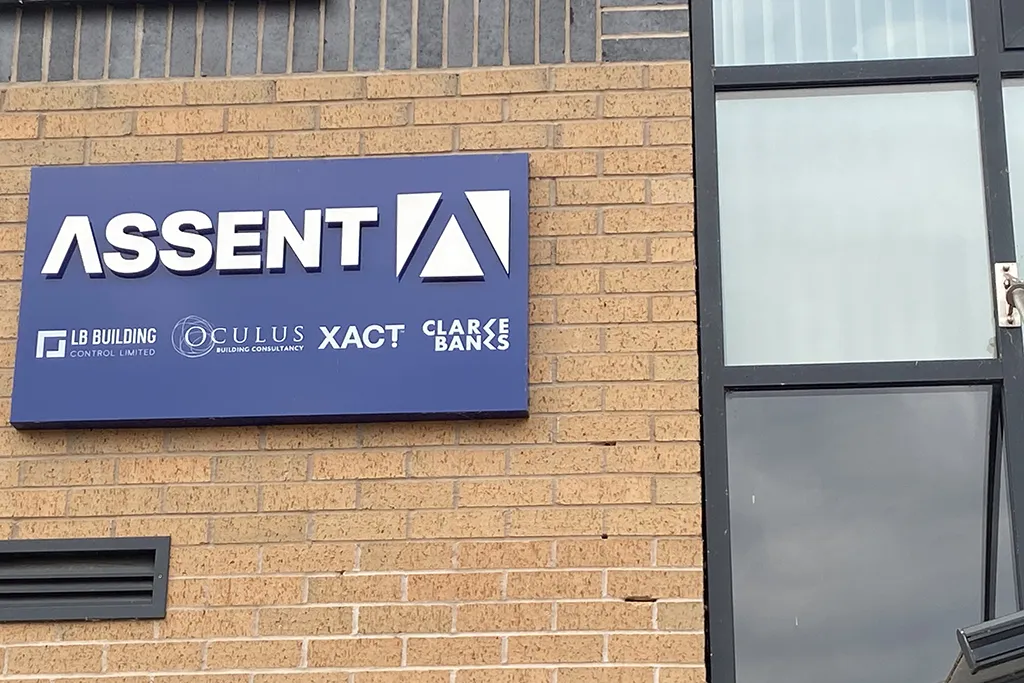
Legislation has effectively prevented private building control firms from stepping in to reduce the burden on local authorities resulting from the collapse of Assent Building Compliance Ltd, a senior industry figure has warned.
Chris Vaughan, director at Approved Inspectors Ltd and chair of the Association of Building Control Approvers (ABCA), said the private sector had both the willingness and the capacity to support affected clients but had been prevented from helping due to the legislation.
Vaughan told Construction News that the problem stems from how Assent issued mass project cancellation notices last weekend under section 52(srcA) of the Building Act.
That action triggered the “transfer of work” protocol, which requires any registered building control approver (RBCA) taking over a project to complete a number of actions if it becomes the regulator on the project:
Carry out due diligence Submit a new Initial Notice within seven days Prepare a transfer report within 2src days Wait for the local authority to accept the transfer report and transfer certificate Vaughan said: “It’s just not practical. We’ve been contacted by hundreds of clients.
“We haven’t got staff available to do transfer reports within the time limits.”
He said the transfer protocol was effectively unworkable for all but a few small schemes and that appetite for using it is limited due to the timescales and amount of additional work required.
In addition, the RBCA would need to charge a fee for this work, Vaughan said.
He said that if, during the investigation stage of preparing the transfer report, contraventions were found with the as-built work, the transfer certificate would be rejected and the project would revert back to the local authority, which would also need to charge a fee.
Vaughan said that if Assent had done nothing, clients could have cancelled their own projects using a different legal route under section 52(3) of the act.
That approach would have allowed more time and flexibility, and would not have triggered the seven-day deadline, he said.
“The private sector are willing. We would have been able to help out on a lot of these projects. Unfortunately, the legislation and the way that the notices have been cancelled have resulted in creating this problem.”
Vaughan said some private firms may be taking on selected schemes but the volume of jobs involved made it impossible to mount a wholesale rescue.
“If works have not started, then the person carrying out the work could cancel the Initial Notice and a new Initial Notice could be submitted,” he said. “The problem is only on work which has started.”
Vaughan estimated around 24,000 projects were in Assent’s system, but said as many as src8,000 may already be completed and occupied and therefore reverted to the local authority many years ago.
“There’s probably only about 6,000 which are ongoing,” he said.
With the seven-day window now close to expiring for many schemes, he said most will revert to local authority control by default.
However, private firms may still be able to support councils through subcontract arrangements.
Meanwhile, Assent Building Compliance and two of its subsidiaries have formally filed winding-up petitions with the courts.
The Wakefield-based firm, which supplies compliance, inspection, certification, training and safety services, and two of its biggest entities, Oculus Building Consultancy Ltd and LB Building Control, lodged the orders through law firm Osborne Clarke on Thursday (6 November).
A hearing is expected to take place at Leeds County Court in due course.
Construction News revealed the firm was facing collapse last week after it set alarm bells ringing when it issued risk of redundancy notices to staff.
Comments are closed